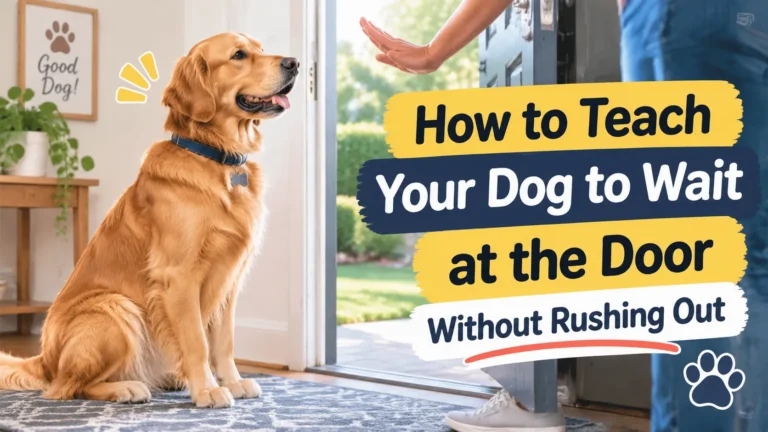
How to Teach Your Dog to Wait at the Door Without Rushing Out
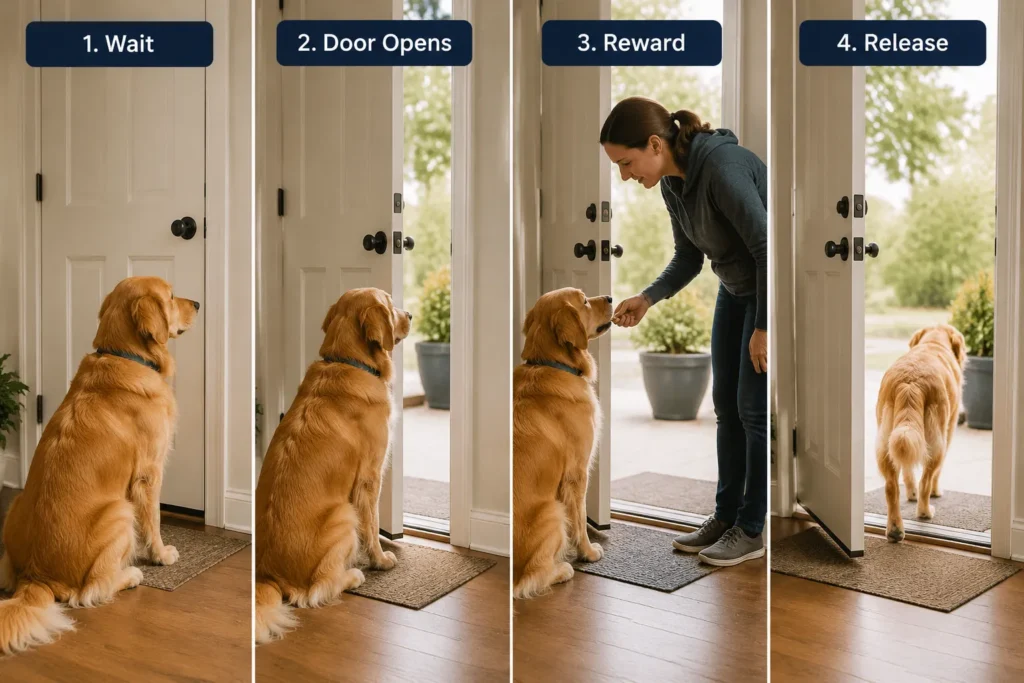
A door opens, your dog sees the outside world, and suddenly the leash goes tight. To teach your dog to wait at the door, reward a brief pause, practice with the door opening in small increments, and give a consistent release cue before moving through together. Start somewhere quiet and use a leash or secure barrier: training is helpful, but it is not a substitute for physical safety.
Before training: make the doorway safe
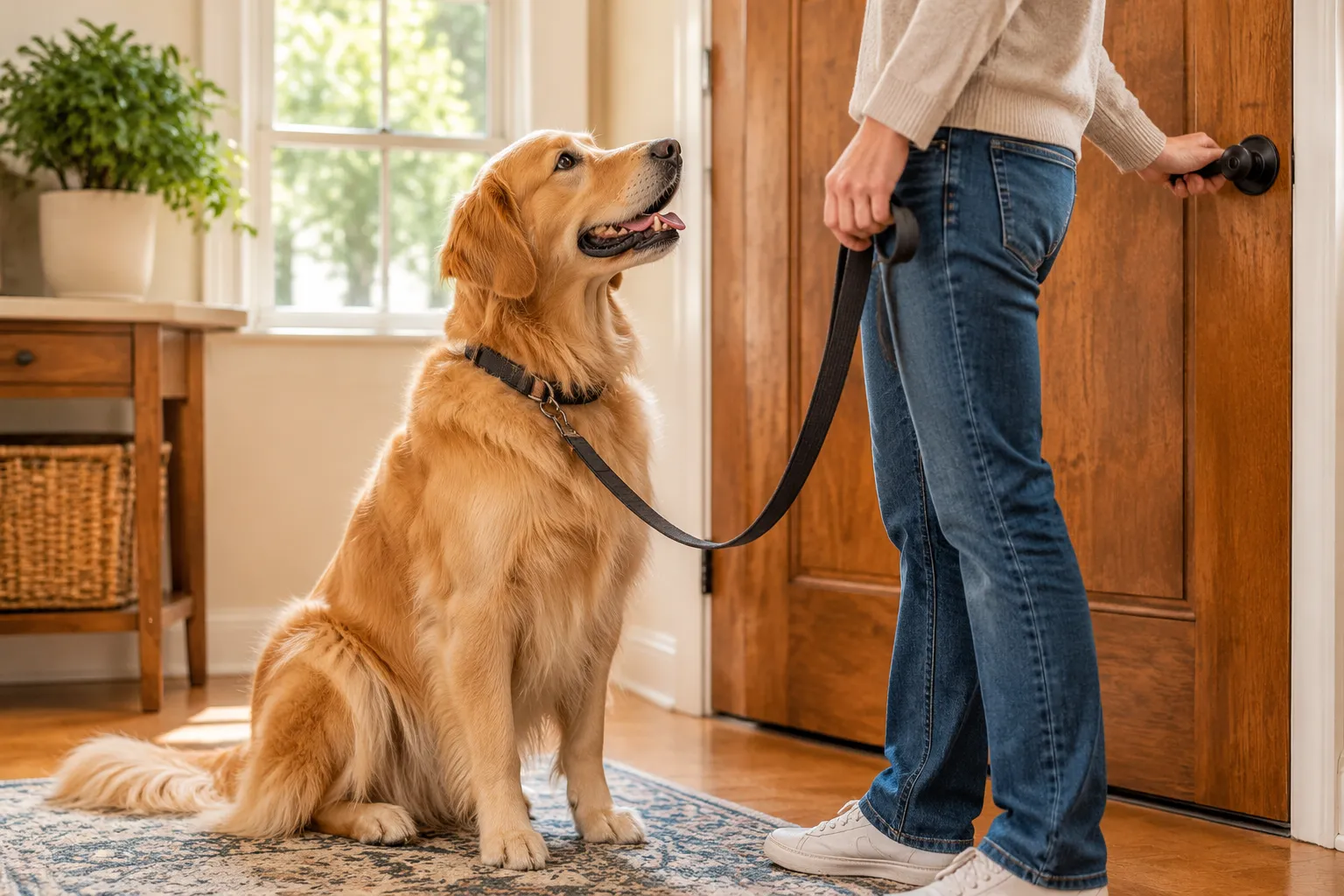
Choose a quiet time and have small treats ready. If your front door leads straight to traffic or another hazard, practice first at an interior door or behind a securely closed gate. Attach a well-fitting harness or collar and leash before approaching an exterior exit. Do not leave a dog tethered unattended.
For deliveries and visitors, use a closed room, secure gate, or another barrier while this skill is still developing. A dog who can wait during practice may still rush when surprised. The American Kennel Club describes management alongside training for exactly this reason.
Build the skill in small pieces
Your goal is not a perfect sit. A dog can stand, sit, or change position while learning to pause; what matters is that they are not pushing through the opening. Keep sessions short and finish before either of you becomes frustrated.
- Reward a pause away from the exit. At a quiet interior door, stand with your dog on a loose leash. When they pause or look toward you, mark the moment with a calm “yes” and offer a treat on the inside, away from the gap.
- Make the handle part of the exercise. Reach toward the handle. If your dog stays relaxed, reward and lower your hand. If they surge forward, move farther back or make the movement smaller. Repeat at an easier level.
- Open only as far as your dog can manage. Move the door a small amount, then reward a pause on the safe side. Gradually make the opening wider over multiple successful repetitions. Never close a door on a paw, nose, or body.
- Add a release cue. Choose a word such as “let’s go.” Say it once, then invite your dog to walk through with you. Practice the cue in a secure area first. Sometimes close the door after rewarding instead of going out, so an opening does not always predict a walk.
- Practice in the real setting gradually. When the quieter doorway is going well, repeat at the front door with the leash attached and a secure backup barrier where possible. Start again with a small opening and an easy pause.
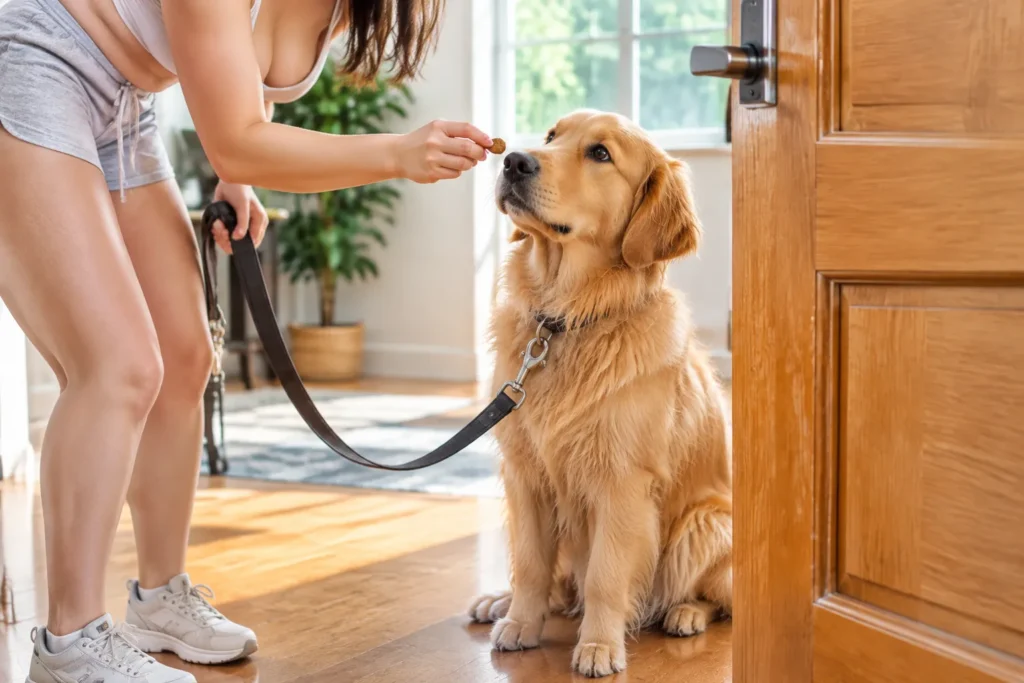
The Dogs Trust doorway guide also recommends beginning in a calm place and rewarding relaxed behavior. Best Friends Animal Society describes using a release cue and increasing difficulty gradually.
A simple way to tell whether to progress
Change only one challenge at a time: how far the door opens, how long your dog pauses, the location, or the level of distraction. If you add a new challenge, make the other parts easier.
| What you notice | What to try next |
|---|---|
| Your dog can pause comfortably with the handle moving | Try a small door opening. |
| Your dog pauses at a small opening and takes the reward | Repeat, then gradually widen the opening. |
| Your dog lunges, jumps, or cannot take a treat | Stop, add distance, use a quieter door, or take a break. |
| A visitor or delivery arrives before you are ready | Use a secure barrier or separate room rather than testing the skill. |
Swipe the table sideways to see all columns.
A pause can be very brief at first. Record the doorway, the opening, the distraction, and whether your dog could respond. If a step is hard, returning to an easier one is useful information—not failure.
When your dog is too excited to wait
If your dog pulls toward the door, do not yank the leash, shout, or keep repeating the cue. Calmly prevent access, move back to an easier position, and reward a small moment of attention. Reduce the door opening or switch to an interior door for the next attempt.
When you need to leave and there is no time for a lesson, prioritize management. With the dog safely leashed and away from the opening, you can scatter a few treats on the floor inside to give them something to sniff while you prepare. Keep hold of the leash and open the door only when it is safe; treats are not a physical barrier.
Want more structure between sessions?
You can use the steps and progress notes above without buying anything. If you prefer an app to organize additional dog-training practice, Dogo is one option. Dogo describes personalized plans and training programs on its website; we have not independently tested the app or verified that it includes this exact doorway exercise. Check the current features, price, subscription and cancellation terms before deciding. An app cannot replace secure barriers or individualized professional help when those are needed.
Affiliate disclosure: The following link is an affiliate link. If you purchase through it, we may earn a commission.
Common questions
Does my dog have to sit before going outside?
No. A calm pause on four feet can be a useful starting point. Sitting may be comfortable for some dogs, but do not force it, especially if your dog has mobility concerns. If sitting appears painful, ask your veterinarian for advice.
How long will doorway training take?
There is no reliable timetable for every dog. Progress depends on the dog, the environment, and how consistently you can practice. Work at a level where your dog can respond, and use a barrier or leash whenever an escape would be unsafe.
What if my dog waits for me but not for another family member?
Have the other person start at an easier doorway with the same reward and release word. Practice with one person at a time, then gradually add ordinary household distractions. Continue using management until the behavior is reliable in that situation.
Takeaway
Teach the pause before asking for a bigger challenge. Reward the behavior you want, open the door in manageable stages, and release your dog when you are ready to move together. If the environment is too exciting, make the exercise easier—and keep a physical safety plan in place.