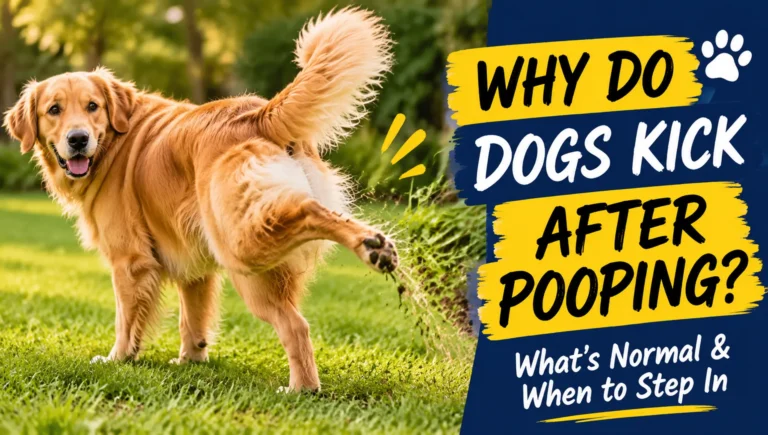
Why Do Dogs Kick After Pooping? What’s Normal and When to Step In
If your dog kicks grass or dirt after pooping, they may be leaving a scent or visual signal for other dogs. This behavior, often called ground scratching, is usually normal. You generally don’t need to stop it unless your dog is hurting their paws, damaging a surface, or showing other signs that concern you. The exact message behind each scratch is not something we can know for certain.
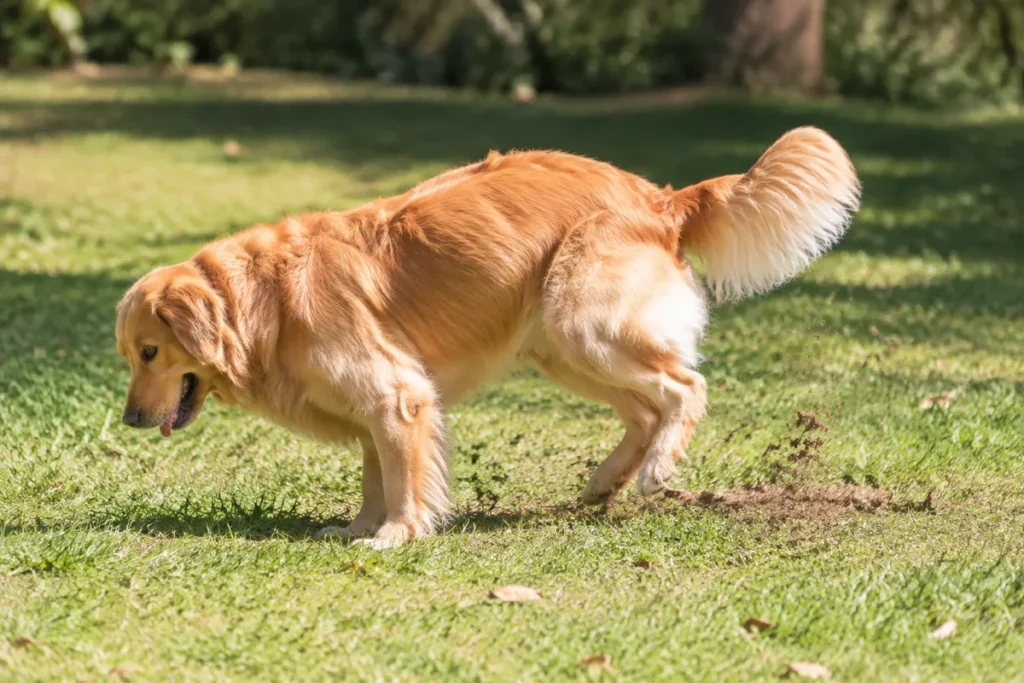
What is your dog doing?
Some dogs take a few steps after they poop and scrape the ground backward with their paws. Others do it after peeing or even after sniffing an interesting spot. Not every dog does it, and dogs that do may not scratch after every bathroom break.
Ground scratching can leave visible marks and may spread odors associated with the feet or the surrounding area. Veterinary behaviorist Dr. Wailani Sung describes it as a possible combination of scent and visual communication in PetMD’s guide to ground scratching.
Why might dogs kick after pooping?
Scent and visual signals
Dogs have scent-producing structures around their paws. Scratching may leave or spread scent, while the marks in grass or dirt may also be visible to other dogs. It may be one way a dog communicates that they have been in the area.
A 2020 study of dogs’ responses to foot scent found evidence that dogs can recognize scent collected from other dogs’ feet. The study did not establish the meaning of every scratch or prove that a dog is deliberately sending a particular message after each poop.
Are they trying to cover the poop?
It can look like an attempt to bury waste, but kicking backward does not necessarily mean your dog is trying to cover it. Experts have proposed different explanations, and the behavior may depend on context. Rather than assigning one intention to every dog, look at what your dog actually does and whether the situation creates a problem. The Farmer’s Dog discusses several possible explanations.
Is the behavior normal? A practical check
| What you notice | A reasonable next step |
|---|---|
| Your dog scratches briefly, seems comfortable, and walks away normally | Observe and let them finish if the area is safe. |
| Grass or soil is being thrown onto a path, garden, or other people | Give your dog space, choose a more suitable bathroom area next time, and practice a gentle cue away from the trigger. |
| The paws or nails look sore, cracked, or damaged | Stop using the rough surface and contact your veterinarian for advice. |
| The behavior is new, increasingly intense, or accompanied by limping, licking, or discomfort | Contact your veterinarian. A change in behavior has more than one possible explanation. |
Swipe the table sideways to see all columns.
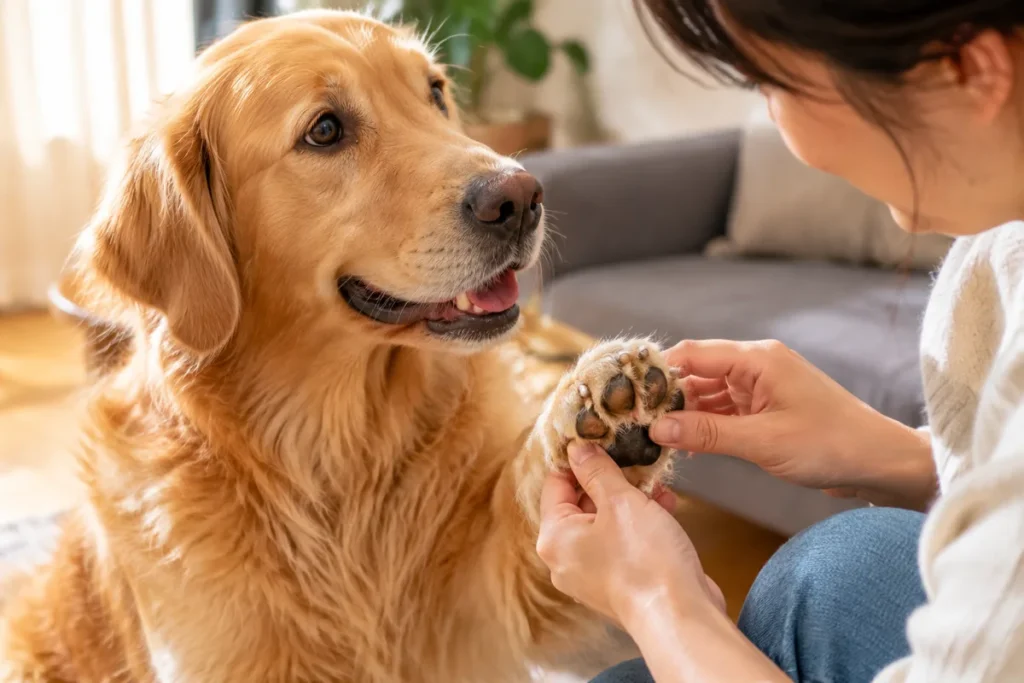
This table is a starting point, not a diagnosis. If you see bleeding, a significant injury, or your dog appears to be in pain, seek veterinary advice promptly. PetMD notes that ground scratching usually does not need to be stopped unless it causes damage or injures paws or nails. Chewy’s veterinary-reviewed discussion also recommends contacting a veterinarian when scratching is excessive or the dog seems uncomfortable.
How to manage kicking without punishing your dog
If everyone is safe and the surface can tolerate it, allowing your dog to finish may be the easiest option. If you need to protect a lawn, another person, or your dog’s paws, plan ahead rather than scolding after the fact.
- Choose a suitable spot. Where permitted, use an area away from delicate landscaping, traffic, and other people. Avoid rough ground if it is hurting your dog’s feet.
- Give your dog room to finish. Keep a safe distance from flying dirt and wait until your dog has completed the bathroom break. Keep hold of the leash without jerking it.
- Practice a moving cue somewhere quiet. Away from the bathroom area, say a cue such as “let’s go,” take a step, and reward your dog when they move with you. Keep the practice short and comfortable.
- Use the cue when it is useful. Once your dog understands it in easier settings, invite them to move away when the bathroom break is finished. Reward the response; don’t drag them away or punish scratching.
- Clean up safely. Pick up the waste after your dog has finished and you can approach safely. Wash your hands afterward.
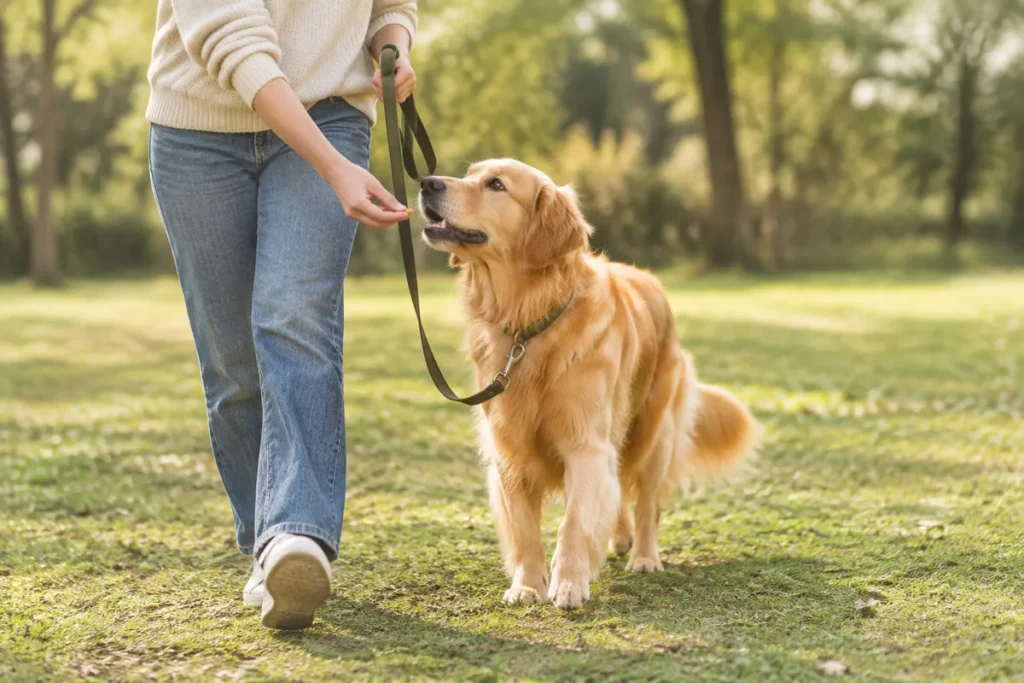
If your dog can’t respond, reduce distractions and practice at an easier location. A cue is a management tool, not a guarantee that a dog will never scratch. For fear, distress, or recurring difficulty, ask a veterinarian or a qualified reward-based trainer for individual guidance.
Want more structure for everyday training?
The steps above are free to use. If you would like an app for additional practice with general cues and routines, Dogo is one option. Dogo describes personalized training plans and basic obedience programs on its product page. We have not independently tested the app or verified a specific course for post-poop ground scratching. Check current features, pricing, subscription, and cancellation terms before deciding. An app does not replace veterinary care or individual professional help.
Affiliate disclosure: The link below is an affiliate link. If you purchase through it, we may earn a commission.
Frequently asked questions
Do dogs kick after peeing too?
Yes. Ground scratching can happen after urination as well as after defecation. Some dogs may also scratch after sniffing; it doesn’t have to follow every bathroom break.
Do female dogs kick after pooping?
Yes. Both male and female dogs can show this behavior. Whether an individual dog scratches, and how often, varies.
Should I stop my dog from kicking grass?
Not automatically. If your dog seems comfortable and isn’t damaging the area or putting anyone at risk, scratching is usually not a reason to intervene. If there is a practical problem, try changing the location and rewarding a learned moving cue.
What if my dog suddenly starts scratching much more?
Notice the surface, frequency, and any other changes, such as limping or paw licking. A sudden or substantial change, signs of discomfort, or injured paws warrants a conversation with your veterinarian rather than an assumption about the cause.
The bottom line
Kicking after pooping is commonly normal ground scratching. It may leave scent and visual signals, but you can’t know exactly what each movement means. Let your dog finish when it is safe; use gentle management when needed; and seek veterinary advice for injury, discomfort, or concerning changes.