Why Is My Puppy Peeing Inside? A Practical Plan for Accidents
Puppy accidents are common while your dog is learning. Start by offering more frequent bathroom breaks, supervising closely, rewarding your puppy after they finish in the right place, and cleaning accidents without punishment. If accidents are sudden, unusually frequent, or accompanied by discomfort, contact your veterinarian rather than assuming it is a training problem.
Urgent: If your puppy repeatedly strains to pee and produces little or no urine, seek veterinary care immediately. A urinary blockage can be an emergency. PetMD explains the warning signs.
First, work out what happens before the accident
An accident does not tell you by itself whether your puppy needs a different routine, is distracted outdoors, or has a health concern. Look for a pattern before changing everything at once.
| What you notice | What to try next |
|---|---|
| An accident follows a nap, meal, drink, or energetic play | Offer a bathroom trip after that event and note whether the timing helps. |
| Your puppy goes outside but pees soon after coming back | Give the outdoor trip a little quiet time; if nothing happens, return inside under close supervision and try again soon. |
| Accidents happen when nobody is watching | Use a puppy-safe, gated area and arrange bathroom breaks; keep your puppy in sight when you can. |
| Your puppy suddenly urinates more often, seems uncomfortable, or has blood in the urine | Contact your veterinarian. If they strain and produce little or no urine, seek urgent care. |
Swipe the table sideways to see all columns.
This is a starting point, not a diagnosis. Some puppies have no obvious warning, and a change in behavior may have more than one explanation. VCA Animal Hospitals describes common signals and a reward-based routine.
Build a routine around your puppy, not a promise
Offer trips after waking, eating, drinking, and play, as well as regularly while your puppy is awake. Young puppies may also need overnight trips. How often depends on the individual puppy, activity, health, and environment; ask your veterinarian for guidance if you are unsure.
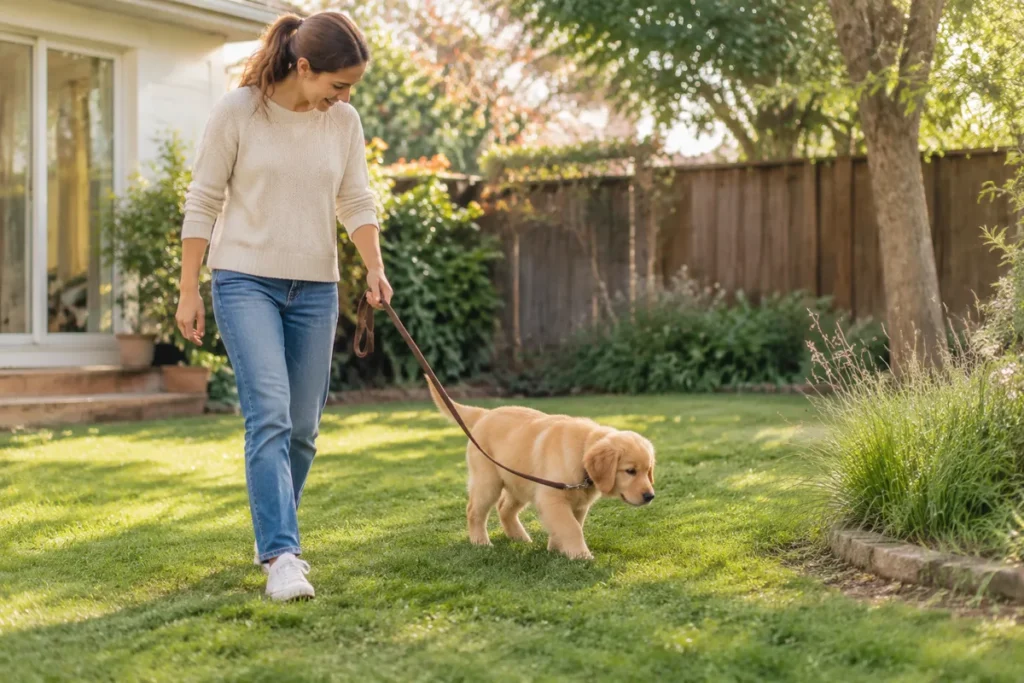
Take your puppy to the chosen bathroom spot and give them a few quiet minutes. When they finish, praise and offer a small treat there, before returning indoors. Then, if it is safe, allow a little sniffing or play so the trip does not always end immediately after toileting.
If your puppy does not go, bring them back inside, watch closely, and try again soon. Shorten the interval when accidents keep happening; gradually adjust it as your puppy becomes more reliable. The ASPCA house-training guide also emphasizes supervision, frequent breaks, and rewards.
What if your puppy pees just after coming inside?
The outdoors can be distracting, and a puppy may not have finished or may not have gone at all. Do not assume they are doing it deliberately.
- Choose a reasonably quiet, safe bathroom spot and accompany your puppy.
- Wait calmly for a few minutes rather than turning the trip into play immediately.
- If your puppy pees, reward after they finish while you are still at the spot.
- If nothing happens, return indoors and keep your puppy in sight; offer another trip soon, especially if they sniff, circle, or become restless.
- If this pattern continues or comes with unusually frequent urination or discomfort, ask your veterinarian for advice.
For puppies who are not fully vaccinated, ask your veterinarian which outdoor areas are appropriate in your location. Avoid relying on an unsafe area just to follow a schedule.
Make supervision and cleanup easier
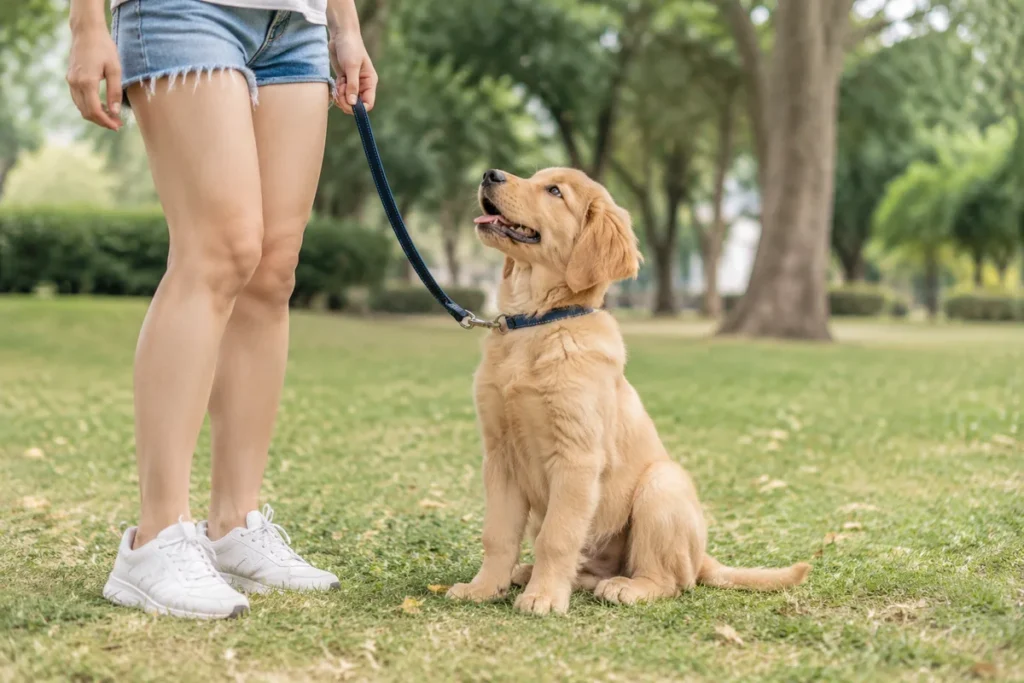
Use a gate or puppy-safe pen to limit access to areas you cannot watch. A crate is not a substitute for bathroom breaks; introduce one positively and do not leave a puppy confined longer than they can comfortably manage. When you must be away, arrange help or a safe area with a separate appropriate toilet surface, as advised for your situation.
If you catch an accident beginning, calmly guide your puppy to the appropriate spot if you can do so without frightening them. If you discover the accident later, simply clean it; do not scold, hit, or rub your puppy’s nose in it. Punishment can make a puppy afraid to eliminate in front of you.
Blot the area and use a pet-safe cleaning product suitable for the surface; an enzymatic cleaner is one option. Follow the label, test a hidden area first, keep your puppy away until it is safe, and never mix cleaning chemicals. No product can guarantee that an accident will never happen again.
A simple accident log you can start today
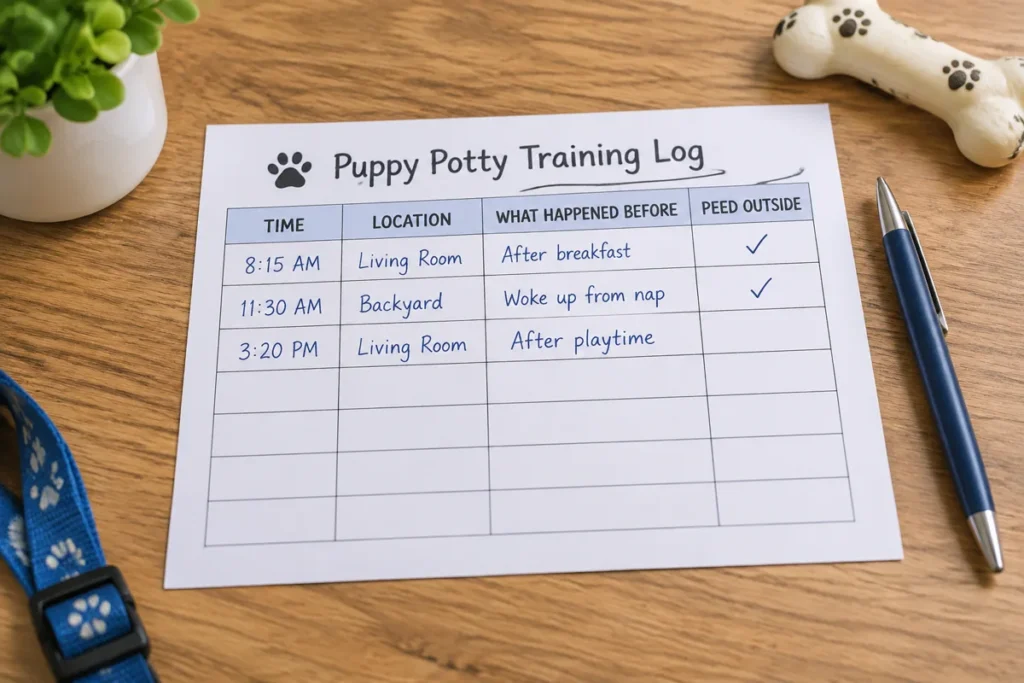
For each trip or accident, note the time, location, what happened just before, and whether your puppy peed outdoors. After a few days, look for a useful pattern: perhaps your puppy needs a trip sooner after a nap or closer supervision after an unsuccessful outing. Adjust one practical part of the routine and keep observing; a log is a planning aid, not a medical test.
If you need help covering the day, ask a trusted person or professional to provide breaks. Keep fresh water available; do not restrict drinking to prevent accidents. If your puppy has ongoing accidents despite adjustments, contact your veterinarian or a qualified reward-based trainer.
An optional guide for a more structured routine
Affiliate disclosure: Some links in this article are affiliate links. If you buy through them, we may earn a commission.
The steps above are free. If you prefer a packaged guide, the seller describes Potty Training in 7 Days as a downloadable training program with schedule and troubleshooting material. We have not independently tested it or verified its contents. The product name is not a promise that your puppy will be trained in seven days; progress varies.
Before buying, check the current price, delivery, refund terms, and whether the guidance fits your puppy. A paid guide is optional and cannot replace veterinary care or the help needed for a puppy who cannot be supervised.
Frequently asked questions
Is it normal for a puppy to have accidents indoors?
Yes. Accidents can occur while a puppy is learning and developing. A sudden change, discomfort, or unusually frequent urination deserves veterinary advice.
Should I punish my puppy for peeing inside?
No. Clean the area and adjust supervision and bathroom opportunities. If you see your puppy start, guide them calmly without frightening them.
Can a puppy use a pad and also learn to go outside?
An indoor toilet area can be a practical option when outdoor access or supervision is limited. Be consistent about the location, reward the behavior you want, and make a gradual transition if your eventual goal is outdoor toileting. Ask your veterinarian or a qualified trainer for an individual plan.
How long will potty training take?
There is no reliable deadline for every puppy. Age, health, learning history, and the routine all matter. Focus on safe, consistent practice rather than expecting a particular number of days.
The bottom line
Notice the pattern, offer bathroom breaks that fit your puppy, reward success, and clean calmly. Get veterinary advice for concerning changes, and seek urgent care if your puppy strains and produces little or no urine.
If you want to review a paid option after trying the free plan, consider the Potty Training in 7 Days guide. Check its terms and suitability before buying.